




. As Future Africa confirms minimal exposure
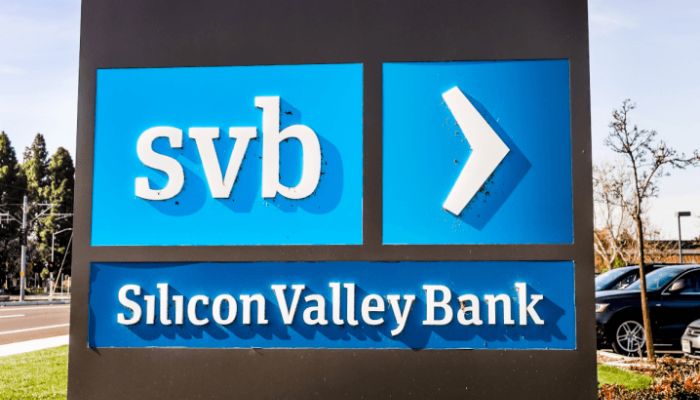
The U.S. government took extraordinary steps Sunday to stop a potential banking crisis after the historic failure of Silicon Valley Bank, assuring all depositors at the failed institution that they could access all their money quickly, even as another major bank was shut down.
Associated Press (AP) The announcement came amid fears that the factors that caused the Santa Clara, California-based bank to fail could spread. Regulators had worked all weekend to try to find a buyer for the bank, which was the second-largest bank failure in history. Those efforts appeared to have failed Sunday.
In a sign of how fast the financial bleeding was occurring, regulators announced that New York-based Signature Bank had also failed and was being seized on Sunday. At more than $110 billion in assets, Signature Bank is the third-largest bank failure in U.S. history.
The near-financial crisis that U.S. regulators had to intervene to prevent left Asian markets jittery as trading began Monday. Japan’s benchmark Nikkei 225 sank 1.6% in morning trading, Australia’s S&P/ASX 200 lost 0.3% and South Korea’s Kospi shed 0.4%. But Hong Kong’s Hang Seng rose 1.4% and the Shanghai Composite increased 0.3%.
In an effort to shore up confidence in the banking system, the Treasury Department, Federal Reserve and FDIC said Sunday that all Silicon Valley Bank clients would be protected and able to access their money. They also announced steps that are intended to protect the bank’s customers and prevent additional bank runs.
“This step will ensure that the U.S. banking system continues to perform its vital roles of protecting deposits and providing access to credit to households and businesses in a manner that promotes strong and sustainable economic growth,” the agencies said in a joint statement.
Under the plan, depositors at Silicon Valley Bank and Signature Bank, including those whose holdings exceed the $250,000 insurance limit, will be able to access their money on Monday.
Also Sunday, another beleaguered bank, First Republic Bank, announced that it had bolstered its financial health by gaining access to funding from the Fed and JPMorgan Chase.
In a separate announcement, the Fed late Sunday announced an expansive emergency lending program that’s intended to prevent a wave of bank runs that would threaten the stability of the banking system and the economy as a whole. Fed officials characterized the program as akin to what central banks have done for decades: Lend freely to the banking system so that customers would be confident that they could access their accounts whenever needed.
The lending facility will allow banks that need to raise cash to pay depositors to borrow that money from the Fed, rather than having to sell Treasuries and other securities to raise the money. Silicon Valley Bank had been forced to dump some of its Treasuries at a loss to fund its customers’ withdrawals. Under the Fed’s new program, banks can post those securities as collateral and borrow from the emergency facility.
This step will ensure that the U.S. banking system continues to perform its vital roles of protecting deposits and providing access to credit to households and businesses in a manner that promotes strong and sustainable economic growth.
$25bn to offset any losses
The Treasury has set aside $25 billion to offset any losses incurred under the Fed’s emergency lending facility. Fed officials said, however, that they do not expect to have to use any of that money, given that the securities posted as collateral have a very low risk of default.
Analysts said the Fed’s program should be enough to calm financial markets on Monday.
“Monday will surely be a stressful day for many in the regional banking sector, but today’s action dramatically reduces the risk of further contagion,” economists at Jefferies, an investment bank, said in a research note.
Though Sunday’s steps marked the most extensive government intervention in the banking system since the 2008 financial crisis, its actions are relatively limited compared with what was done 15 years ago. The two failed banks themselves have not been rescued, and taxpayer money has not been provided to the banks.
President Joe Biden said Sunday evening as he boarded Air Force One back to Washington that he would speak about the bank situation on Monday. In a statement, Biden also said he was “firmly committed to holding those responsible for this mess fully accountable and to continuing our efforts to strengthen oversight and regulation of larger banks so that we are not in this position again.”
Regulators had to rush to close Silicon Valley Bank, a financial institution with more than $200 billion in assets, on Friday when it experienced a traditional run on the bank where depositors rushed to withdraw their funds all at once. It is the second-largest bank failure in U.S. history, behind only the 2008 failure of Washington Mutual.
Some prominent Silicon Valley executives feared that if Washington didn’t rescue the failed bank, customers would make runs on other financial institutions in the coming days. Stock prices plunged over the last few days at other banks that cater to technology companies, including First Republic Bank and PacWest Bank.
Among the bank’s customers are a range of companies from California’s wine industry, where many wineries rely on Silicon Valley Bank for loans, and technology startups devoted to combating climate change. Sunrun, which sells and leases solar energy systems, had less than $80 million of cash deposits with Silicon Valley. Stitchfix, the clothing retail website, disclosed recently that it had a credit line of up to $100 million with Silicon Valley Bank and other lenders.
Future Africa reassures investors
As fears heighten, Future Africa, a venture capital and private equity outfit, said the firm and its funds have minimal exposure to Silicon Valley Bank.
A statement posted on its website reads in part: “At Future Africa, we enjoyed a great collaborative relationship with Silicon Valley Bank and mourn its loss alongside the many startups and funds that are now impacted by this catastrophic event.
“We believe it is important to communicate our exposure to Silicon Valley Bank across our funds and the proactive steps we are taking to manage risk for our organization and portfolio companies.
“We can report Future Africa and its funds have minimal exposure to Silicon Valley Bank. The team is working very quickly to build new account relationships with established global banking institutions as soon as funds are available on Monday.”
Regarding the status of its Fund II, Future Africa said: “We have no risk of exposure, as the fund was fully deployed as of January this year.
“This means that all SPV and Rolling fund investments that were made through AngelList or Vauban have been wired to companies and we have no uninvested capital exposure to SVB or any other bank directly or indirectly via our custodians at AngelList and Vauban.”
The investment firm also empathised with any of its portfolio companies impacted by this event, adding that it is available for questions.
“We are with you and actively working with established global banking institutions to design solutions that ensure the continued safety and availability of your funds. We will continue to provide guidance as the situation evolves and we learn more,” it assured.


