


Digital energy multinational, Schneider Electric, says existing technologies can reduce carbon emissions by 70% and engineer a healthier energy world for humans across the world.
Microgrids Expert, Schneider Electric, Teina Teibowei, spoke with journalists on Schneider’s aim for upscaling the energy world, at an Innovation Summit in Maryland, U.S., a statement said on Friday.
The event was attended by Schneider Electric Group Chairman and CEO, Jean-Pascal Tricoire, and top pioneer companies in the microgrid space.
It addressed how industry experts, through software and technologies, are making the digital, electric world a reality, and organisations across the world can accelerate digital transformation by choosing the right technologies to achieve a wide range of sustainability goals like microgrids.
Teibowei said carbon emissions from the power sector in Nigeria reached around 11.7 million metric tonnes of carbon dioxide in 2020 but could be reduced using technologies like microgrids.
“With the recent sustainability dilemma facing the world; rapid transformations in technology across all sectors, and the tripled advancement of cars, computers, phones, and daily technologies relied on, there is an ever-increasing demand for more energy than the 20th century technology for technological power advancement.
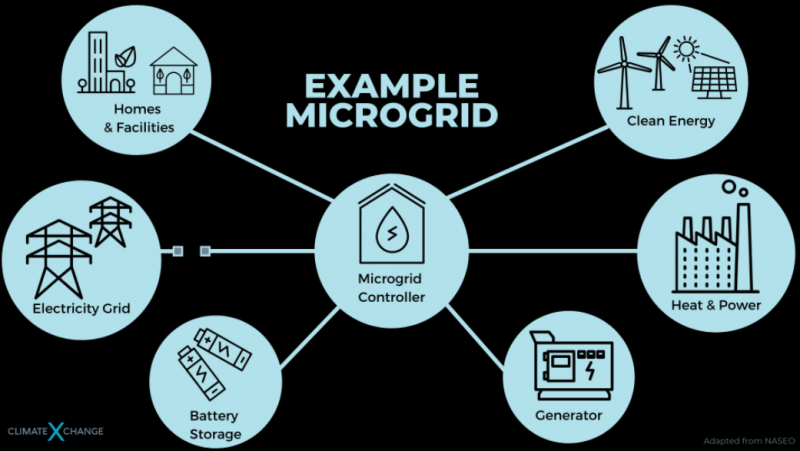
“Microgrids are self-contained electrical networks that draw from on-site energy sources and can operate independently of the grid.
“They offer straightforward solutions for elevating energy resilience and clean energy. Thus, they are a key 21st -century solution for powering 21st century technologies.”
Microgrids are self-contained electrical networks that draw from on-site energy sources and can operate independently of the grid. They offer straightforward solutions for elevating energy resilience and clean energy.
Teibowei also shared some sustainable approaches to providing resilient and clean energy as well as a core point for organisations wishing to adopt microgrids in Nigeria, on the use of Energy-as-a-service funding model for seamless project execution.
“The Energy-as-a-service model limits technical and operational risk, while delivering on reliability and cost-effectiveness. Schneider Electric is strong with an extensive network of partners in West Africa to deliver on this solution.”
Regional Product Application Engineer, Schneider Electric, Babajide Ogunlesi, said the use of microgrids is participating in the resolution of the energy challenge in Nigeria by paving a sustainable path to electrification, as well as providing innovative energy solutions to drive cost-efficiency for homes and organizations.
He also mentioned a key point to note when building a microgrid, which is to start with a right sized microgrid design to optimise cost efficiencies as there is no one-size-fits-all.
“It is essential to right-size at the design phase of the microgrid for it to deliver measurable energy-cost efficiency.
“Factors to consider are the specific load to power, the load requirements at any given time and the demand sources.
“Taking the time to design the solution properly avoids ending up with an under or over-sized microgrid.
The goal is to tailor a solution that is just right for the user’s energy needs.”
Schneider Electric provides purpose driven focus to provide energy and automated digital solutions.
The solutions are for efficiency and sustainability in every home, industry, infrastructure, data centre, by combining energy technologies, real-time automation, software, and services. (NAN)