


New research has revealed the emergence of major shifts in globalisation, as companies across the world rush to move supply chains to combat geopolitical challenges and volatile economic conditions.
The latest Trade in Transition study, commissioned by DP World and led by Economist Impact, captured the perspectives of thousands of global company leaders as they navigate the latest disruptions to global trade – from inflation to extended COVID-lockdown policies in some markets.
The South African data revealed that the country’s logistics leaders are optimistic about new technology yet are more concerned than other African regions surveyed about rising inflation rates.
The report’s key finding is that 96% of companies globally confirmed they are making changes to their supply chains due to geopolitical events.
In South Africa, almost 48% of respondents stated they are diversifying their supplier base by increasing the number of suppliers in their supply chain, while at the same time, 37% are expanding into more stable and transparent markets to hedge against risk.
The top limitations facing South African companies looking to increase exports in 2023 are led by higher transport costs (26.1%), followed closely by concerns around higher tariffs in key markets (21%) and supply shortages of key inputs (16.8%).
By bringing production closer to the final customer, firms can reduce the number of touch points involved in the supply chain and build greater resilience into the flow of freight cargo around the world.
Future of trade
Looking further into the future of trade, factors like rising inflation (34.5%), the potential for COVID-19 lockdowns in other markets globally (21%), and global warming and extreme weather patterns (20.2%) are the main concerns for SA business for the next two years.
Still, there remains optimism, with 37% of local respondents noting “new technologies improving the ability to monitor supply chains and increase efficiency” and an expected rise in economic growth rates (26.1%) could bring about positive change in the coming two years.
Respondents identified key elements to drive growth: growing demand in key markets globally (31.9%), expansion of operations into new markets (22.7%), and a tie between faster delivery times and improved access to trade finance (both at 16.8%).
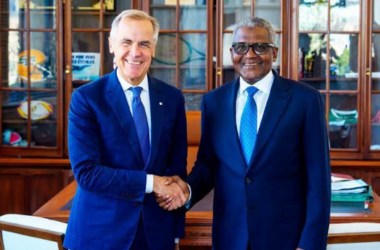
Speaking at the launch of the report at the World Economic Forum in Davos, Switzerland, DP World Group Chairman and CEO, Sultan Ahmed Bin Sulayem, said: “The report is tangible evidence of how globalisation is changing as companies look to meet new challenges. By bringing production closer to the final customer, firms can reduce the number of touch points involved in the supply chain and build greater resilience into the flow of freight cargo around the world.
“But the trade environment is always changing. The next challenge that will alter these trends is the looming economic slowdown looming in regional markets. Agility, real-time visibility, and end-to-end supply chain capabilities will be critical to ensuring companies can continue to find new efficiencies in an increasingly challenging environment.”
Rizwan Soomar, DP World CEO & MD for the India Subcontinent and Sub-Saharan Africa said: “We are committed to support our customers in South Africa with their future growth journeys. Our trade finance offerings have been designed to address some of the key concerns of our customers around inflationary pressures and supply shortages, while our digital solutions will offer greater transparency and help bring efficiency in supply chains.”
Digital Tools will Enable Business Growth and Resilience
The report also revealed an emphasis on digital tools, which hold the key to making trade operations more resilient. Thirty-seven per cent of SA respondents noted the increased use of digital tools for improved inventory management has been most effective.
Yet the value of potential growth is immense. A majority of global respondents noted that their firm’s exports could increase by 5% or more if they adopted new technologies within the supply chain. The opportunity for technology to transform the logistics sector is strong – 34.5% of South African companies surveyed began using advanced automation and robotics in 2022.
This is the third edition of the Trade in Transition report commissioned by DP World and led by Economist Impact. It is a global survey that retrieves data from over 3,000 executives, examining their experience of the pandemic, confidence in government policies, supply chain pressures on the movement of trade around the world and ESG priorities in trade.
The report deep dives into regional (North America, South America, Europe, Middle East, Africa, and Asia-Pacific) and sectoral data (FMCG, industrial, consumer goods, energy and natural resources, health and pharma) to compare and contrast priorities in international trade.