




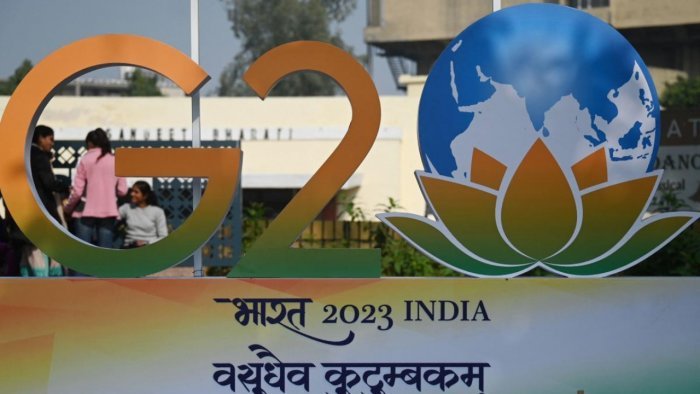
The International Renewable Energy Agency (IRENA), in partnership with the Indian G20 Presidency, launched a comprehensive report today in Mumbai, India, on how low-cost finance can accelerate the energy transition.
Titled: Low-Cost Energy Transition Finance, and developed in close collaboration with India’s Ministry of New and Renewable Energy (MNRE), the report provides a toolbox to increase the availability of low-cost capital in G20 countries and beyond.
The G20 or Group of 20 is an intergovernmental forum comprising 19 countries and the European Union. South Africa is the only African country in the Group, which works to address major issues related to the global economy, such as international financial stability, climate change mitigation, and sustainable development.
The report was introduced by IRENA’s Deputy Director-General, Ms. Gauri Singh, alongside MNRE Secretary, Mr. Bhupinder S Bhalla, and India’s Power Ministry Secretary, Mr. Alok Kumar.
The unveiling took place at a side-event, jointly organized with MNRE and the Indian Renewable Energy Development Agency, during the G20’s 3rd Energy Transition Working Group (ETWG) in Mumbai.
In a statement issued on the launch of the report, IRENA Director-General Mr. Francesco La Camera, was quoted as saying: “The global energy transition requires a rapid scale-up of renewable energy deployment globally, making access to low-cost finance urgently vital.
“We are proud to contribute to the work of the G20 and provide valuable insights that support India’s Presidency in facilitating access to affordable finance in developing and advanced economies.”
The global energy transition requires a rapid scale-up of renewable energy deployment globally, making access to low-cost finance urgently vital.
According to IRENA’s Preview of the World Energy Transitions Outlook, to meet the 1.5°C climate goal, the renewable energy share in the primary energy mix should rise to about three-quarters, necessitating annual investments averaging over $5 trillion until 2030.
However, access to funding in many emerging and low-income economies is insufficient, and often too costly, to accelerate the energy transition at the necessary rate.
In this regard, although country-specific circumstances vary, country risk or policy risk is often identified as the primary impediment for international institutional capital flows, according to the report.
Drawing from the lessons learned from the sharp cost reductions seen in solar and wind power in recent years, the report lists enabling frameworks that can reduce the transaction costs of technology transfers and facilitate foreign direct investments to accelerate the scale-up of hydrogen, offshore wind and battery storage – critical technologies for the next stage of the energy transition.
These innovation frameworks can drive improvements in enabling technologies, business models, market design, and system operation. technological maturity, innovation, system integration, manufacturing capacity increase, and reduced labour costs, according to the report.
Low-cost financing is identified as one of the six key priority areas established by India’s G20 Presidency. IRENA is also collaborating with the Presidency on other priorities, including resource efficiency and circular economy in the steel sector.


