


. As local content participation rises to 61%
By Stanley Onyeka, Lagos
The Nigerian Content Development and Monitoring Board (NCDMB), yesterday, disclosed plans to commence modification of our various certification portals in readiness for the joint industry capacity audits of in-country manufacturers and service providers operating within the oil and gas industry.
The planned audit, it explained, is part the framework to harmonise the grading system for ranking the various in-country capacities and capabilities and comes under the Harmonisation Framework.
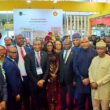
Executive Secretary, NCDMB, Felix Ogbe, in a keynote address to the 25th Edition of Nigeria Oil and Gas (NOG) Energy Week Conference & Exhibition 2026, in Abuja, said the framework was jointly developed with other government agencies.
They include Nigerian Petroleum Exchange (NipeX); Nigerian Upstream Petroleum Regulatory Commission (NUPRC); Nigerian Midstream and Downstream Petroleum Regulatory Authority (NMDPRA); Nigerian National Petroleum Company (NNPC) Limited; and the Oil Producers Trade Section (OPTS).
In his address themed: Shaping the Next Phase of Local Content Growth,”
Ogbe said: “The outcome of the in-country capacity audit will provide a detailed understanding of existing capabilities, eliminate intermediaries, improve contracting cycle timelines, and ensure direct patronage of established service providers for business sustainability and growth.”
He added that “the findings from the exercise will also enable the Board and industry stakeholders to make informed decisions regarding investment priorities, technology partnerships, financing support, and policy interventions.”
He noted that the Harmonisation Framework comes as over the last 15 years, Nigeria’s local participation in the oil and gas industry from marginal levels of less than 5% to 61% a situation where Nigerians now own assets, provide services, execute projects and contribute significantly across the oil and gas value chain.
Buoyed by the significant local content impact across the industry value chain, he said the capacity audit became imperative.
He added: “It is important to note that while the capacity audit will aid in identifying service providers able to support major capital projects such as the seven deepwater projects.
“The industry via the Harmonisation Framework has adopted five Classes of service providers which recognises new entrants into the oil and gas industry that require support in one form or the other.
“Class 4 and Class 5 of the framework tagged ‘Emerging Players’ and ‘Essential Vendors’ will form the foundation for a robust vendor development programme designed to support the evolution of such service providers into manufacturers and original equipment manufacturers.”
He continued: “The Board plans a structured approach that identifies high-potential vendors, assesses their readiness for manufacturing, facilitates technical partnerships, improves access to financing, and connects them to guaranteed market opportunities.
“In addition to the efforts to eliminate intermediaries and sustain established service providers, we continue to work on our processes and tools to enhance Ease of Doing Business with the Board.
“We released the NCEC Application Guidance Notes to provide clarity on requirements to secure hassle-free approval of applications. We also released email for Escalations in case of any undue delays.
“Our SLA timelines on project certifications continue to improve and we are delighted at wave of major oil and gas projects moving through the funnel in the last one year.
“We rolled out the Field Readiness Training Program to focus on top-10 high-demand skill areas so that trainees are better positioned for opportunities on the back of upcoming investments.
“We currently have about 20,000 individuals registered on the program awaiting call-up for selection tests in their area of interest.
The findings from the exercise will also enable the Board and industry stakeholders to make informed decisions regarding investment priorities, technology partnerships, financing support, and policy interventions.
Rising content levels
Regarding the increasing indigenous participation in the oil and gas industry, Ogbe argued that whilst the increase to 61% is commendable, a lot still needs to be done.
According to him, “this next phase of local content growth must go beyond participation and compliance. It must focus on capacity expansion, industrialization, manufacturing, sustainability and global competitiveness.
“The reality is that Nigeria’s energy sector has the capacity to support a vibrant manufacturing ecosystem. Yet, many local manufacturers continue to operate below capacity due to limited market access, technology gaps, and financing constraints.
“A key foundation for capacity expansion is assurance that established capacities will enjoy the required patronage so that they could sustain their business and grow.”
He added that addressing these challenges requires strategic collaboration among regulators, operators, service companies, financial institutions, and manufacturers, which led to the idea of the joint audit.