


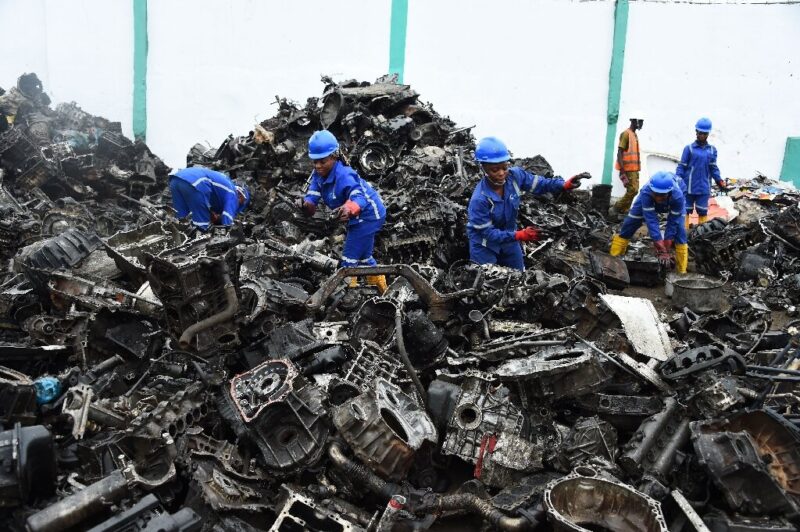
The Association of Scrap and Wastepickers of Lagos has called for the formal inclusion of waste pickers in environmental and climate policies, saying their contributions to recycling and waste recovery remain largely unrecognised.
ASWOL’s president, Friday Oku, made the call in a statement on Friday to mark World Environment Day 2026.
Mr Oku described waste pickers as critical stakeholders in Nigeria’s circular economy, noting that thousands of them recover recyclable materials daily from streets, dumpsites and drainage channels.
According to him, their activities help reduce environmental pollution, divert waste from landfills and support recycling efforts.
He, however, said that despite their contributions to waste management and climate action, waste pickers continue to face health risks, inadequate protective equipment, poor pricing for recovered materials, and a lack of formal recognition.
“True climate action is impossible without the workers who collect waste by hand. We demand formal safety protections, fair pricing and inclusion in the state’s recycling policies,” he said.
Mr Oku said efforts to tackle plastic pollution and improve recycling outcomes would be more effective if waste pickers were formally integrated into environmental programmes and waste management systems.
He urged the Federal Ministry of Environment, the Lagos State Ministry of the Environment, and corporate organisations to provide training, social protection, and personal protective equipment for waste pickers.
According to him, the formalisation of waste pickers has become more important as Lagos intensifies measures to curb plastic pollution and promote sustainable waste management.
Mr Oku said recognising waste pickers as key environmental stakeholders would improve livelihoods, increase recycling rates and strengthen Nigeria’s climate and sustainability goals. (NAN)
True climate action is impossible without the workers who collect waste by hand. We demand formal safety protections, fair pricing and inclusion in the state’s recycling policies.